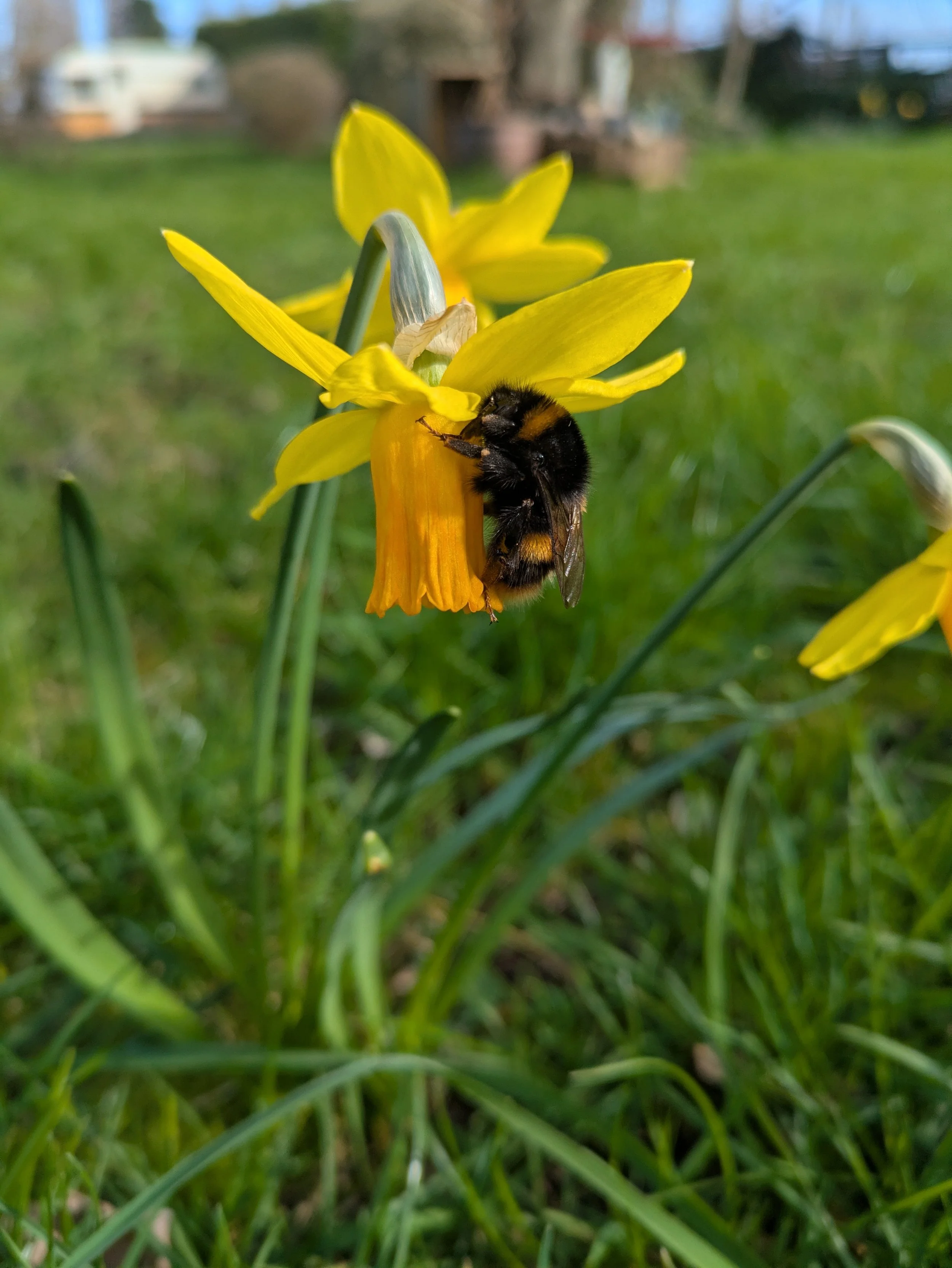
We Need to Root in Order to Rise

Over the last few months, a phrase has kept emerging in our Reiki School of Self & Wisdom teachings: root to rise.

It wasn't something we set out to build the curriculum around, but it has appeared again and again in our conversations, practices, reflections, and healing journeys. The more I sit with it, the more I realise it captures something I have witnessed not only in my own healing but in the journeys of so many women who come through Peace Heal Love.

We have been taught that healing is about ascension.

We are encouraged to raise our vibration, connect with our intuition, open ourselves to higher wisdom, and become more evolved versions of ourselves. There is a place for all of that. Spiritual connection matters. Intuition matters.

But what I have often found, is that the healing that creates real and lasting change rarely begins by reaching upwards.

It begins by going down.

It begins by rooting ourselves back into our bodies, our emotions, our truth, and our lived experience.

Many of the women I work with arrive feeling disconnected from themselves. They are often highly capable, deeply caring, and incredibly self-aware. Yet beneath that there can be a sense of exhaustion, uncertainty, or feeling lost. They know how to perform, achieve, and care for others, but many have never been taught how to truly listen to themselves.

And honestly, I don't think that's accidental.

The patriarchal culture many of us have been raised within has taught us to value what can be measured, produced, achieved, and controlled. It rewards us for pushing through, staying busy, and overriding our own needs. Women in particular have been conditioned to second-guess themselves, suppress their instincts, and seek permission from external sources before trusting their own wisdom.

We are taught to look outside of ourselves for answers.

To the expert.
To the institution.
To the system.
To the next course, book, qualification, or authority figure.

Rarely are we encouraged to trust the intelligence already living within us.

The irony is that many healing journeys begin in exactly the same way. We start searching for the next thing that will fix us, heal us, or transform us. We continue looking outward and upward.

Yet true healing often asks something very different.

It asks us to slow down enough to hear ourselves.

To notice where we have abandoned our needs.

To feel the emotions we've spent years trying to avoid.

To reconnect with our bodies after decades of being taught they are something to control, criticise, or ignore.

To remember that our intuition doesn't live somewhere above us. It lives within us.

This is why the phrase root to rise has resonated so deeply within the Reiki School of Self & Wisdom.

Because before we can expand, we need a foundation.

Before we can trust our intuition, we need to trust ourselves.

Before we can access deeper wisdom, we need to create safety within our bodies.

Before we rise, we root.

What I love about Reiki is that while many people come to it seeking spiritual connection, what they often discover is a profound reconnection to themselves. Through Reiki, self-reflection, embodiment practices, and community, we begin peeling back the layers of conditioning that tell us we need to be something other than who we are.

We begin remembering.

Remembering our worth isn't dependent on our productivity.

Remembering our bodies hold wisdom.

Remembering that rest is not laziness.

Remembering that our emotions are messengers, not problems.

Remembering that we don't need to constantly strive to become more.

Some of the most profound healing happens when we stop trying to transcend our humanity and instead learn how to fully inhabit it.

When I think about the phrase root to rise, I think about nature. A tree cannot continue reaching skyward without a root system strong enough to support its growth. The higher it grows, the deeper those roots must travel.

The same is true for us.

The women I see experiencing the deepest transformations are not necessarily the ones trying hardest to ascend. They are the ones willing to root. Willing to meet themselves honestly. Willing to come home to their bodies, their truth, and their inner wisdom.

Perhaps that is the real work.

Not becoming someone new.

Not endlessly searching for the next level.

But rooting deeply enough that who we truly are can finally rise.

The Alchemy of an Over- Giver

The alchemy of my life has been learning how to transform wounds into wisdom.

Raised by a narcissistic parent, my needs often went unmet. I learned early to read the room, anticipate the emotions of others, and make myself useful. I became highly attuned to what everyone else needed while becoming disconnected from what I needed myself.

As I grew older, this pattern followed me into adulthood and eventually into my work. I became a healer because I knew what it felt like not to be truly seen, heard, or understood. I wanted to create the kind of space I had longed for—a space where people could feel safe, accepted, and witnessed without judgment.

That vision became the fuel behind Peace Heal Love Wellbeing Centre.

For many years, I gave everything I had. My time, my energy, my attention, my heart. I genuinely wanted to help everyone who crossed my path. While this came from a place of compassion, it also came from an old story: that my worth was connected to how much I could give.

The deeper my own healing journey became, the more I began to understand myself. I learned my patterns. I explored the roots of my over-giving. I discovered that true healing isn't about endlessly pouring from your cup—it's about learning how to honour the cup itself.

Over the years, I developed strong daily rituals and practices that support my wellbeing. These practices help me stay grounded, connected, and energetically clear. They remind me where I end and another person begins. They help me hold space for others without losing myself in the process.

Recently, I was reminded why those boundaries matter.

I found myself supporting someone who was carrying an immense amount of pain and heavy emotional energy. In my desire to help, I let my guard down. I stepped beyond the healthy boundaries I had worked so hard to create and held more than was mine to hold.

The experience affected me deeply. What began as an energetic and emotional impact eventually manifested within my physical body. I became unwell. My body, in its wisdom, signalled that something was out of balance and needed my attention.

Years ago, I may have seen this as a setback. Today, I see it differently.

One of the greatest gifts of my healing journey is that I have learned to trust that even in the darkest moments, there is always light to be found. Every challenge carries a lesson. Every ending creates space for a new beginning. Every shadow invites us to discover a deeper truth about ourselves.

This experience did not break me. It strengthened me.

It reminded me that compassion does not require self-sacrifice.

It reminded me that being of service does not mean carrying another person's burdens.

It reminded me that boundaries are not walls; they are acts of love—for ourselves and for those we serve.

Most importantly, it reminded me how far I have come.

The younger version of me would have continued giving until there was nothing left. Today, I know how to pause, reflect, restore, and reconnect with my own truth. I know that my role is not to save people. My role is to create a safe space where healing can happen while remaining rooted in my own wellbeing.

That is growth.

That is healing.

That is transcendence.

From darkness, I have always found my way back to the light. This experience was no different. It deepened my commitment to my practices, strengthened my boundaries, and expanded my compassion—not only for others, but for myself.

The greatest lesson I have learned as an over-giver is this:

You can be deeply loving without abandoning yourself.

You can hold space without carrying the weight.

You can serve others without sacrificing your own peace.

The more I heal, the more I realise that the most powerful thing I can offer others is not all of my energy, but the healthiest version of it.

What I Tell Students Who Feel Disturbed After Working with the Reiki Symbols during level 2 Okuden training

Every so often, a student comes to me feeling unsettled after working with the Symbols They may describe feeling emotionally overwhelmed, anxious, sad, irritable, or simply "not themselves." Sometimes they wonder whether they have attracted a negative energy or encountered a harmful spiritual influence.

My response is usually the same: before we assume anything supernatural is happening, let's look carefully at what we actually know.

One of the teachings from Frans Stiene that has stayed with me over the years is his reminder that many Reiki practitioners become fascinated with the finger pointing at the moon instead of looking at the moon itself.

In other words, we become so focused on the symbols that we forget what they are pointing toward.

The symbol is the finger.

The experience, the awareness, the practice, the transformation—that is the moon.

When students become frightened by a Symbol, I often find that their attention has shifted from the moon to the finger. The symbol itself has become the focus of fear, speculation, and projection.

I do not view the symbol as carrying a bad spirit or negative spiritual energy. Rather, I see it as a tool that may bring aspects of ourselves into awareness.

Sometimes what surfaces is uncomfortable.

That does not necessarily mean something harmful has entered us. It may simply mean something that was already present has become visible.

Over the years, I have noticed that Symbol 2 for example, can coincide with students becoming more aware of emotional patterns they have carried for a long time. Old fears, unresolved grief, anxiety, anger, self-judgment, or emotional wounds may begin to emerge into conscious awareness.

When that happens, many people immediately search for an external explanation.

"What attacked me?"

"What negative energy have I picked up?"

"What spirit is affecting me?"

I understand why these questions arise. Fear naturally seeks an explanation.

But I encourage my students to ask different questions.

What am I actually experiencing?

What emotions are present?

What thoughts are accompanying these emotions?

Have I felt this way before in my life?

What is this experience trying to show me?

These questions often lead to far more insight than assuming the symbol itself is the problem.

There is another teaching from Frans Stiene that I often return to, particularly when students become concerned about energies, symbols, or what might be happening outside themselves.

He says that we all know what it feels like when someone walks into a room carrying anger—we can feel it. Likewise, when someone is calm, joyful, centred, or open, we can feel that too. Our inner state has an effect on those around us.

What he points to is something very simple but very profound: before we try to heal the world around us, we must first find balance within ourselves.

If I am still carrying anger, worry, fear, or resistance, then those qualities inevitably influence everything I do. But when I cultivate balance, openness, gratitude, and presence, that too has an effect on the people around me.

This is why I think resistance to a symbol can be such a valuable teacher.

When resistance arises, our attention can quickly move outward. We start wondering about the symbol, the energy, the experience, or what might be affecting us. Yet Frans continually brings us back to the same place: ourselves.

The question is not whether Symbols are good or bad.

The question is whether this experience is helping us become more aware of our own state of being.

Am I balanced?

Am I centred?

Am I acting from fear, or from clarity?

Am I looking at the finger, or am I looking at the moon?

The more we can return to our own balance, the less power fear has over our practice. And from that place, Reiki becomes much simpler than we often make it.

When students feel overwhelmed, I usually advise them to simplify their practice for a while. Return to self-treatment. Spend time with the Reiki precepts. Sit quietly. Focus on the breath. Go for a walk. Allow the nervous system to settle.

There is no prize for forcing yourself through a spiritual experience that feels too intense.

Grounding is part of spiritual practice.

I also remind students that not every uncomfortable experience is a sign that something has gone wrong. Growth is not always comfortable. Becoming aware of our patterns is not always comfortable. Healing is not always comfortable.

Discomfort by itself is not evidence of danger.

What matters is how we meet that discomfort.

Do we meet it with curiosity, patience, and awareness?

Or do we immediately create a story around it?

As a teacher, I have found that the students who progress most steadily are not the ones who spend the most time worrying about symbols, energies, or spirits. They are the ones who keep returning to practice itself.

They keep returning to the moon.

The symbol remains what it has always been—a pointer, a teaching aid, a finger indicating a direction.

My invitation is always the same: do not become so fascinated or frightened by the finger that you forget to look where it is pointing.